
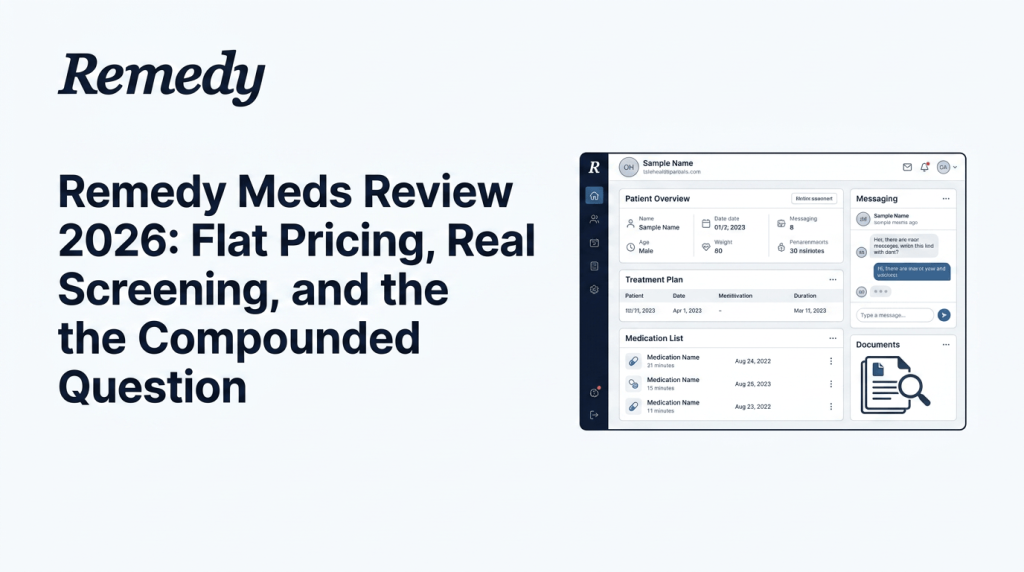
Remedy Meds Review 2026: Flat Pricing, Real Screening, and the Compounded Question
Brand-name GLP-1 medication without insurance can run past $1,300 a month. That single number explains why the compounded telehealth market exists. Remedy Meds offers compounded semaglutide and tirzepatide […]
Brand-name GLP-1 medication without insurance can run past $1,300 a month. That single number explains why the compounded telehealth market exists.
Remedy Meds offers compounded semaglutide and tirzepatide at flat monthly rates, with medication, clinical care, and shipping bundled into one price.
This review covers what it costs, how the intake works, and what “compounded” means for a medication you inject weekly.
Medical disclaimer: This article is educational and is not medical advice. GLP-1 medications are prescription treatments. Only a licensed clinician can determine whether they are appropriate for you.
What Remedy Meds Is
Remedy Meds is a direct-to-consumer telehealth platform focused on weight management. You complete an intake, have a virtual appointment with a licensed clinician, and if prescribed, medication ships to your home from a partner pharmacy.
Headquartered in Summit, New Jersey, the company works with licensed, inspected compounding pharmacies rather than manufacturing anything itself. The model is month to month, with no annual contract and no separate membership fee.
What It Costs
| Plan | Monthly Price | What’s Included |
|---|---|---|
| Compounded semaglutide | $299 | Medication, clinical care, and shipping |
| Compounded tirzepatide | $399 | Medication, clinical care, and shipping |
| Microdose tier | From $189 | Lower-dose compounded option |
| Brand-name Ozempic | Around $1,299 | Same program support, brand-name medication |
| Brand-name Zepbound | Around $1,399 | Same program support, brand-name medication |
Two details matter more than the headline numbers.
Dose increases do not raise your price. Many programs charge more as you titrate upward, which can quietly double a bill over several months. Remedy Meds holds the rate flat across doses.
There is no membership fee. The monthly figure covers the medication, the clinical care, and delivery, so there is no second charge to account for.
Standard-dose pricing appears after the intake quiz rather than on the homepage, which is common in this category.
How the Intake Works
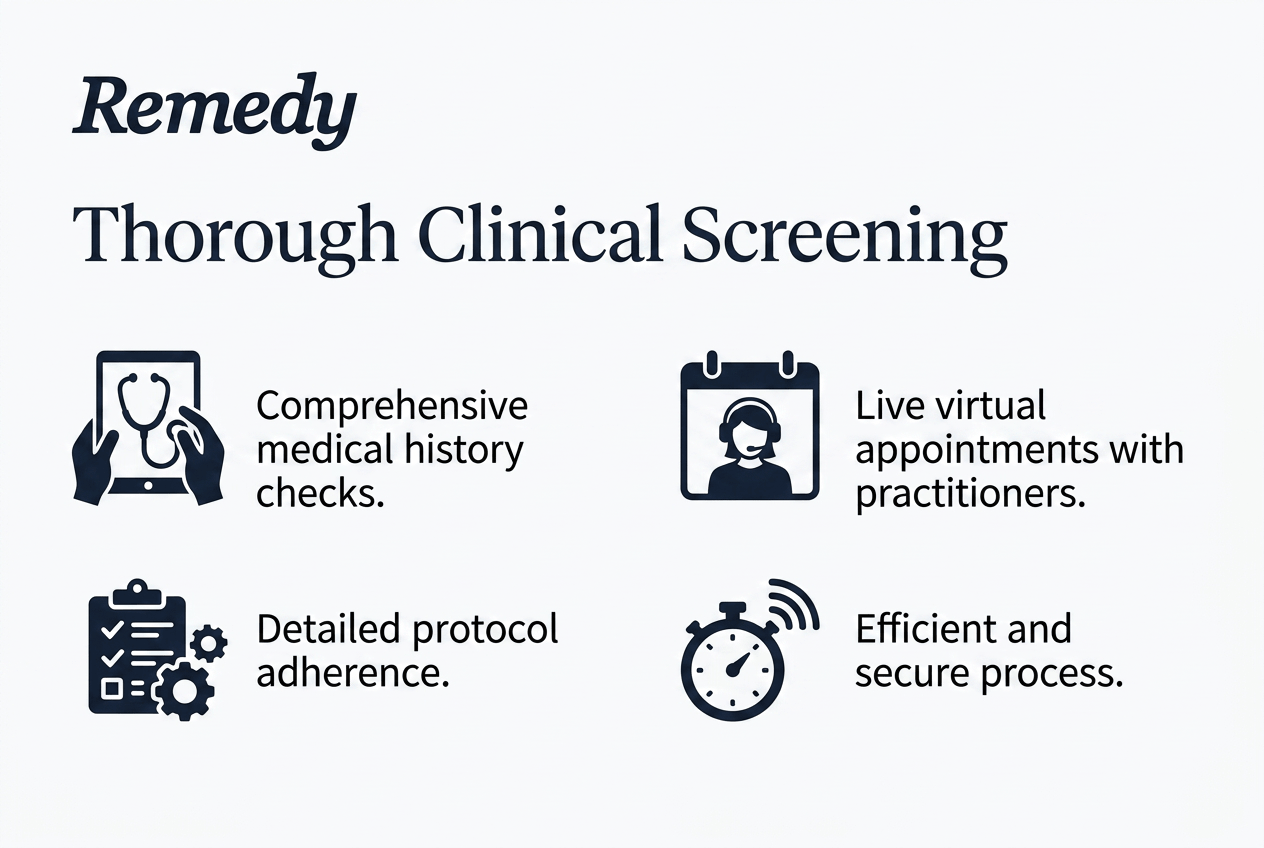
You complete a medical history questionnaire, then have a live virtual appointment with a clinician. That live consultation is worth noting, since several competitors run entirely asynchronous intake with no real-time conversation.
The screening is more thorough than much of the category. Remedy Meds explicitly asks about history of eating disorders such as anorexia and bulimia, and about suicidal thoughts or prior attempts, before a prescription can be issued.
Both questions are clinically appropriate and uncommon in this market. GLP-1 medications suppress appetite, which can destabilize restrictive eating patterns. Screening for it before prescribing is a genuine mark in the platform’s favor.
The Compounded Question
This is the section to read carefully, because it applies to every compounded GLP-1 provider, not just this one.
Compounded medications are prepared by compounding pharmacies rather than the original manufacturer. They are not FDA-approved. The FDA does not review them for safety, effectiveness, or quality, which means they can carry greater risks than FDA-approved products.
Compounding fills a legitimate role in medicine. Section 503A of the Federal Food, Drug, and Cosmetic Act permits pharmacies to compound medications for individual patient needs when a commercial product is unavailable or unsuitable.
The regulatory picture shifted as brand-name shortages eased, and the FDA has tightened oversight across the compounded GLP-1 space. Anyone enrolling should understand they are choosing a product outside the FDA approval pathway, and can ask which pharmacy compounds their medication.
Microdosing GLP-1 medications for weight loss is also experimental and lacks FDA approval, so discuss the microdose tier with a clinician who knows your history.
What the Evidence Actually Shows
The active ingredients have a solid trial base behind them, and it is worth separating that from the compounded formulation question.
Semaglutide for weight management was studied in the STEP trials, published in the New England Journal of Medicine in 2021. Tirzepatide was studied in the SURMOUNT trials, published in NEJM from 2022 onward. Both showed clinically meaningful average weight reduction.
Two caveats. Those trials studied brand-name formulations, not compounded versions, which have no equivalent trial data. And trial populations and endpoints differ from real-world use, so individual results vary.
What Sets the Program Apart
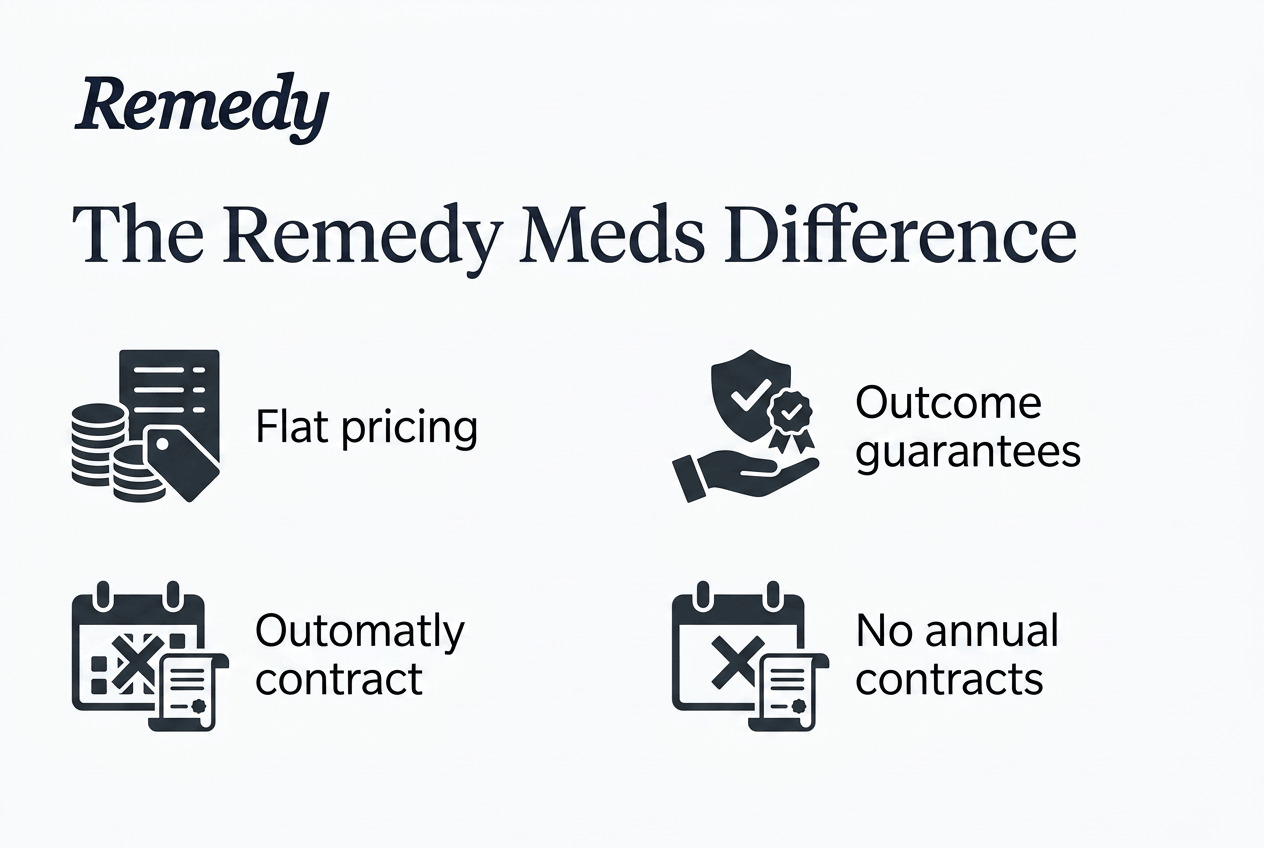
Price lock. Your rate stays the same as your dose increases. In a category where titration commonly pushes monthly costs upward, a flat rate removes the biggest budgeting surprise patients report.
Outcome guarantee. The company advertises a weight-loss guarantee that refunds medication costs if results fall short of its stated threshold for patients who follow the program. Reported terms vary across sources, so confirm current conditions at signup. Few competitors offer anything comparable.
No contracts. The program runs month to month, with no annual commitment and no obligation to continue past the month you have paid for.
Everything is bundled. One monthly charge covers medication, clinical care, and shipping, so there is no second bill to account for.
LegitScript certification. An independent verification that a telehealth business meets legal and regulatory operating standards.
Together these address what people worry about most before enrolling: the price climbing, the program not working, and being locked in.
Before You Start
A short practical checklist for your clinical consultation. GLP-1 medications commonly cause digestive side effects when starting or increasing a dose, so ask your clinician what to expect and how to manage it. Tell them your full medical history, including any thyroid conditions, pancreatitis, gallbladder issues, or history of disordered eating, and mention if you are pregnant or breastfeeding. These medications are not suitable for everyone, and your clinician will determine whether they are right for you.
Whom Remedy Meds Suits
Remedy Meds may fit if you want predictable monthly costs without dose-based increases, prefer a live virtual appointment over a form-only intake, and understand what compounded means.
It is likely the wrong choice if you want an FDA-approved product at a compounded price, since those are different things. Brand-name options are available through the platform, but at brand-name pricing.
Frequently Asked Questions
Is Remedy Meds legitimate?
It is an operating telehealth company using licensed clinicians and inspected partner pharmacies. Legitimacy is separate from the regulatory status of compounded medication, which is not FDA-approved.
Does the price rise as my dose increases?
No. Remedy Meds holds pricing flat across dose increases, which is a meaningful difference from programs that charge more at higher doses.
Are compounded GLP-1s the same as Ozempic or Wegovy?
They contain the same active ingredient but are not the same product. Compounded versions are not FDA-approved and are not reviewed for safety, effectiveness, or quality.
Do I need a prescription?
Yes. Semaglutide and tirzepatide are prescription medications, and a licensed clinician determines whether treatment is appropriate for you.
What if I have a history of disordered eating?
Remedy Meds screens for this at intake. If it applies to you, speak with a clinician who knows your history before starting any appetite-suppressing medication.
The Verdict
Within the compounded GLP-1 telehealth category, Remedy Meds does several things better than average. Flat pricing that does not climb with your dose, no membership fee, a live clinical appointment rather than a form, and screening questions a responsible program should ask.
The larger question is whether a compounded GLP-1 is right for you at all, given these products sit outside FDA review. That is a conversation for you and a clinician who knows your history, not a decision to make from a pricing page.
If you proceed, ask which pharmacy compounds your medication and treat the monthly cost as an ongoing commitment rather than a trial.