
Nutrisystem in 2026: The Meals Are Simple. Your Metabolism? Not So Much.
Nutrisystem‘s been around since 1972. That’s… a while. Half a century of selling weight loss in boxes and cans. These days it’s a doorstep thing, breakfast, lunch, dinner, […]

Nutrisystem‘s been around since 1972. That’s… a while. Half a century of selling weight loss in boxes and cans. These days it’s a doorstep thing, breakfast, lunch, dinner, snacks, all portioned out, math done for you. You don’t cook. Barely even think about food. Tear open a package, heat it up, eat it.
They’ve layered on apps and coaching since the old days. NuMi tracks your meals. Some plans include a “personal coach.” But underneath? Same core idea. Same tiny portions. Same calorie math.
And yeah, the scale moves. Has to.
Most plans land around 1,200 calories for women, 1,500 for men. Steep cut from normal eating. The first week is even more aggressive, shakes, bars, tiny meals designed to drop water weight fast so you see a big number right away. Works psychologically. Your body notices, though. Always does.
The Calorie Math Works. Rest Gets Messy.
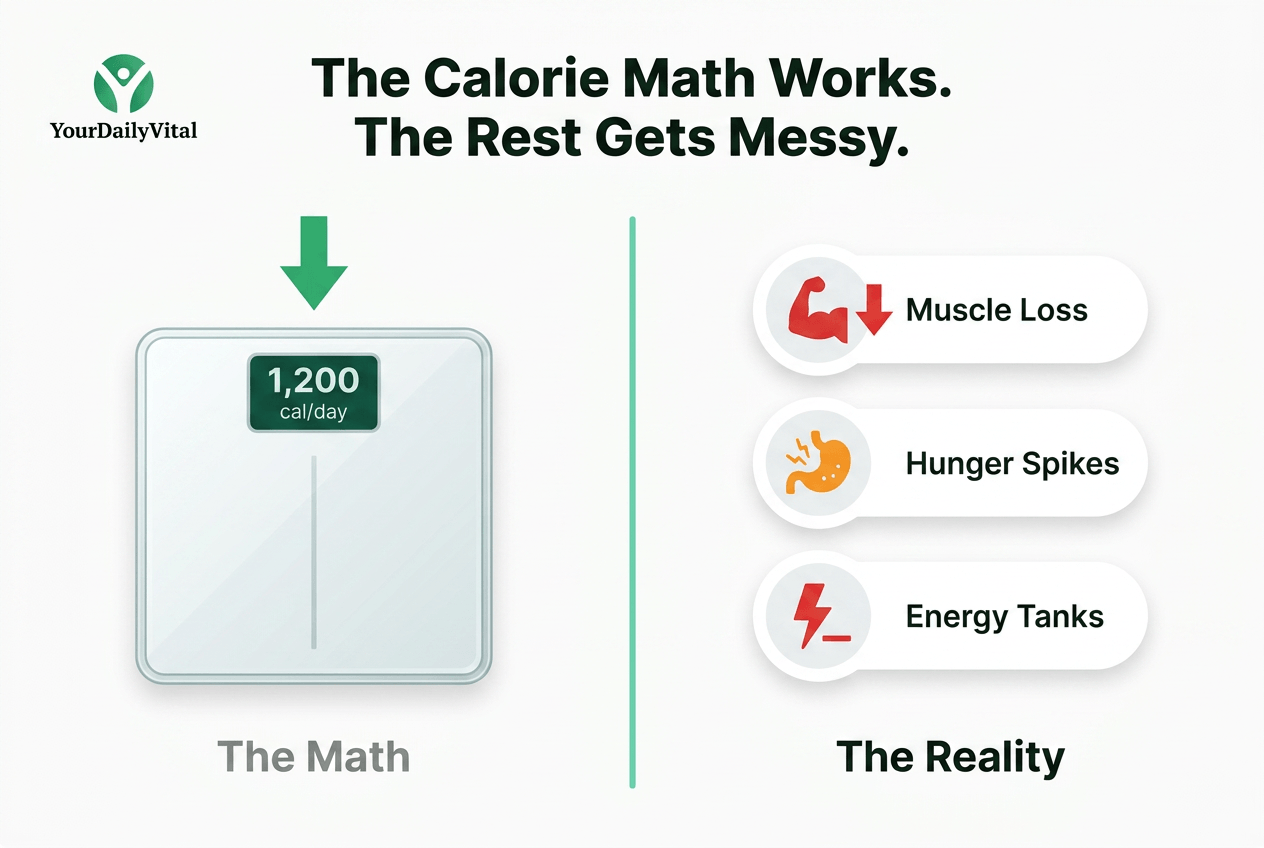
If you eat 1,200 calories a day, you’re gonna lose weight. Just… physics. Nutrisystem knows this. Built an entire company around math a kid could solve.
Meals have protein and fiber. Helps. Protein fills you up. Fiber slows digestion.
But “relative to meal size” is doing too much work. A lot of entrees sit under 300 calories. Some don’t even hit 200. Research shows you need 25–30 grams of protein per meal to actually control hunger and keep muscle. Nutrisystem gives about half that. Per meal. So on some plans you’re looking at maybe 60 grams total for the whole day. Over 40? Exercise at all? Not enough. Not even close.
Drop weight, sure. Probably dropping muscle too. Muscle keeps metabolism from cratering. Once that happens, hunger gets weird. Energy tanks. The body starts fighting back. Metabolic adaptation. Nutrisystem doesn’t have a great answer. They just keep sending the same tiny meals while your body quietly panics.
What’s Actually In These Meals?
The menu looks fun. Pizza. Burritos. Waffles. Ice cream sandwiches. Cleaned things up over the years, no high-fructose corn syrup, no trans fats, no saccharin. Real improvement from decades ago.
But pick up a package. Read the back. Xanthan gum. Modified food starch. Stuff to keep shelf-stable food from tasting like cardboard. Sodium? Yeesh. Mushroom parmesan soup, 490 milligrams in one tiny pouch. Some dinner entrees push 700, 800. Eat three of those plus a snack and you’re brushing up against your daily limit before adding a single grain of your own salt.
Chicken parmesan? Also processed. Frozen, not fresh. Cheese is “cheese product.” The sauce has corn syrup solids. Tastes okay. Not great. Okay.
Ultra-processed. I know, buzzwords. But it matters. Even locked-down calories, processing affects your body. What NOVA classification researchers use? Linked heavy ultra-processed diets to weight regain, worse blood sugar, messed up gut bacteria. Independent of calories. The body doesn’t just count. Read what you’re feeding it.
Insulin resistance? Prediabetes? Watching blood pressure? Refined carbs and salt in the default plan are real drawbacks. They have “diabetes-friendly” options. Standard plan though? Portion control first. Metabolic health second, if at all.
Your Gut Has Some Thoughts
“Gut health” is nowhere in Nutrisystem’s marketing. Kind of a red flag, honestly.
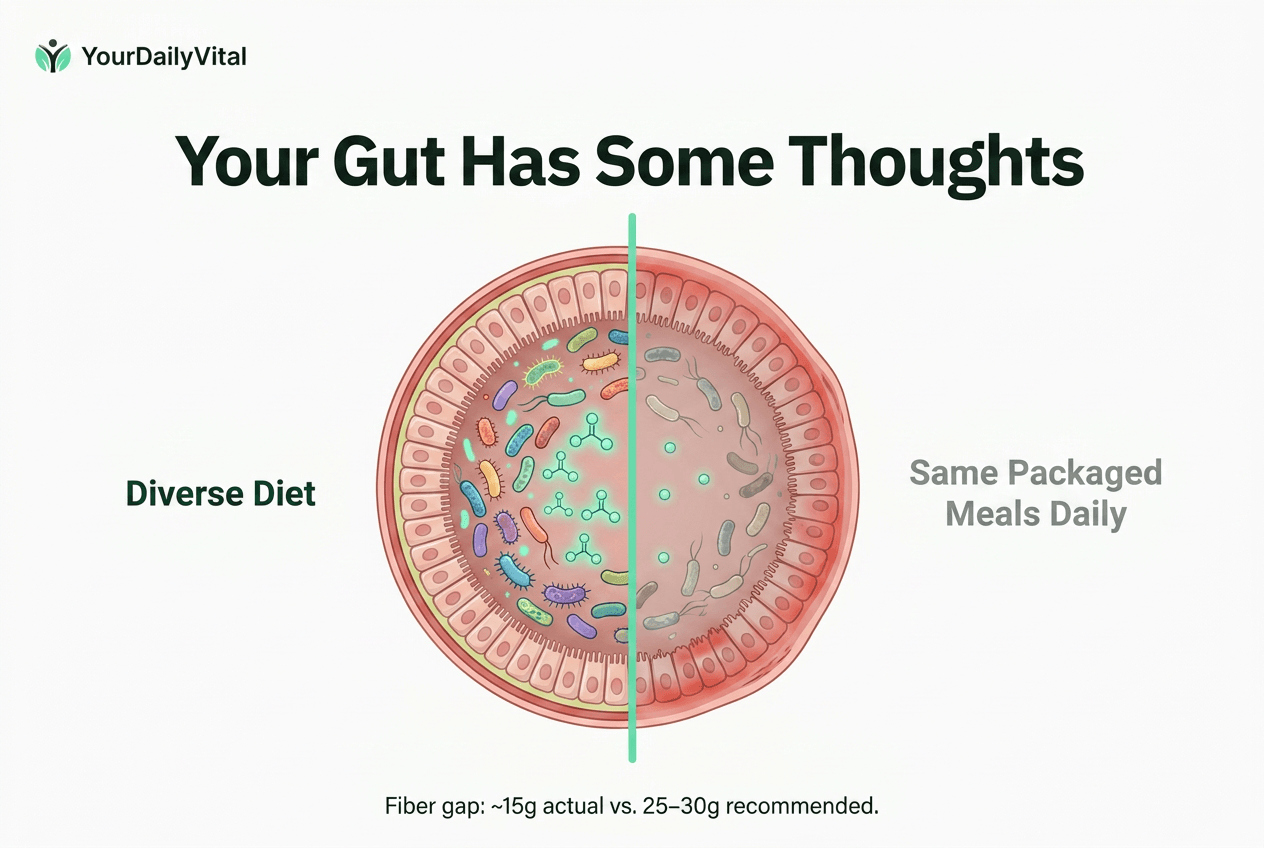
Microbiome needs fiber. Not just any, fermentable. Feeds bacteria, produces butyrate, keeps gut lining strong, inflammation down. Nutrisystem meals? Thin on this. Surprisingly thin. Low diversity. Low polyphenols. Basically no resistant starch. Most days you’re getting maybe 15 grams fiber. Recommendation is 25–30. That’s a big gap.
They tell you to add vegetables as “add-ins.” Non-starchy. Okay, fine. But paying what they ask for convenience of not thinking about food… shouldn’t meals cover basics? Hand fiber problem back to you. Defeats the point, doesn’t it?
Already deal with bloating? Irregularity? Any gut sensitivity? Months of this can make things worse. Not better. Stay on it long-term? Microbiome diversity takes a hit. Actual research, diverse diets build diverse guts. Same packaged meals day after day? Opposite.
What Research Actually Says
2021 meta-analysis in Obesity Reviews. Compared meal replacements like Nutrisystem against traditional calorie-restricted whole-food diets. Early on, three months later, meal replacements did better. More weight loss. People stuck with it. Less decision fatigue.
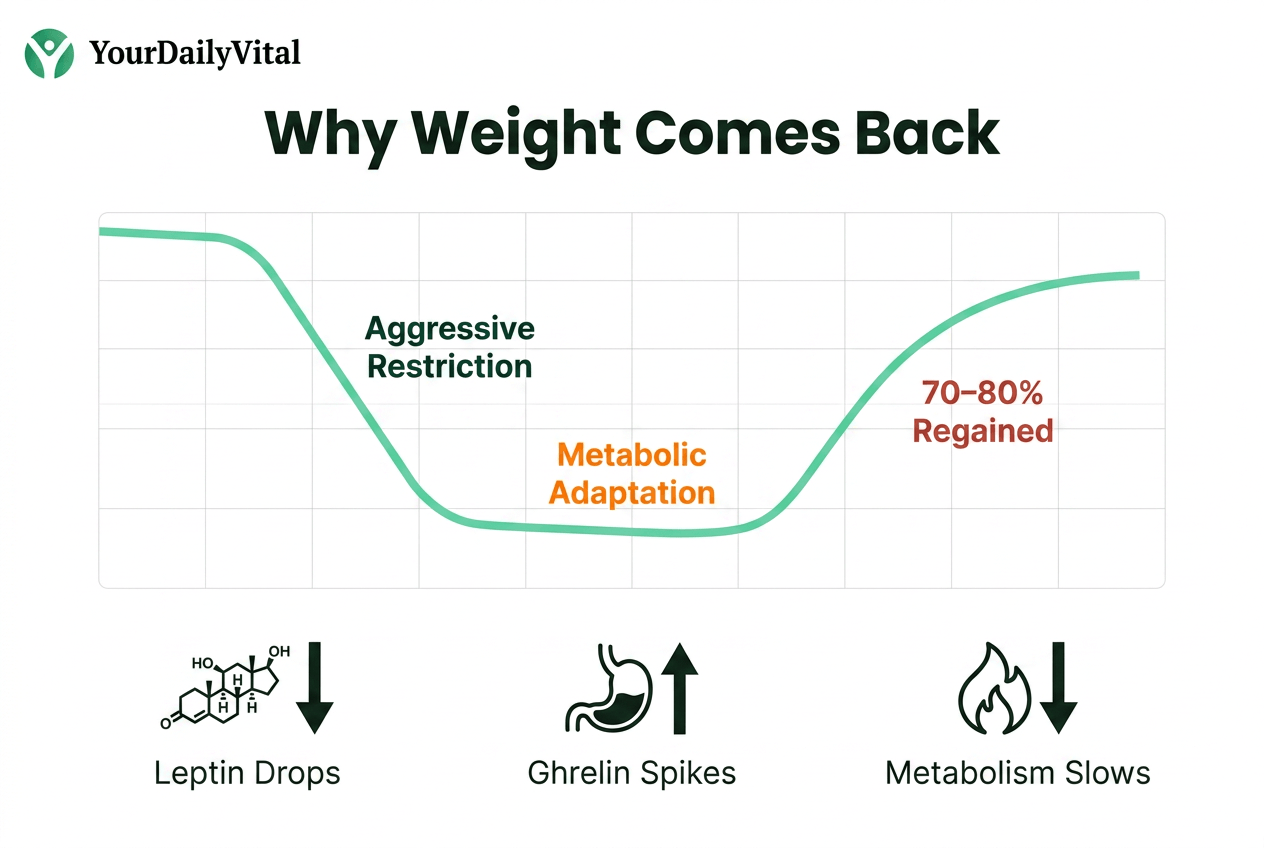
Month twelve? Gap gone. Completely. Both groups regained most weight. We’re talking 70–80% of it back. Dropout rates are basically the same.
Why? Meal replacements teach nothing useful. Open a package. That’s it. Don’t learn to cook. Don’t learn to balance a plate. Don’t learn grocery stores or restaurant menus. Boxes stop showing up? Right back where you started. Except metabolism’s slower now. Hunger hormones screaming.
Quick comparison:
| Nutrisystem | Whole-Food Approach | |
|---|---|---|
| Short-term loss | Fast, 5–10% in 3–6 months | Slower, 1–2 lbs/week |
| Metabolic impact | Muscle loss risk, slowdown | Better lean mass kept |
| Nutrition quality | Processed, low fiber, salty | Whole foods, more nutrients |
| Gut health | Low microbiome support | Supports bacterial diversity |
| Skills learned | Open packages | Cooking, planning, habits |
| Long-term maintenance | Poor, most regain | Better, skills transfer |
| Monthly cost | $300–400 subscription | Usually lower, flexible |
| Best for | Brief reset, 4–8 weeks | Actual lifestyle change |
Why Weight Comes Back
Not really Nutrisystem-specific. Meal replacement problem. Hard restriction problem.
Cut calories aggressively, leptin drops. Ghrelin up. My brain is obsessed with food. The body burns fewer calories at rest, sometimes 100–300 fewer per day per 22 pounds lost. Also move less. Subtle stuff. Fidget less. Take stairs less. NEAT drops. Not willpower failure. Physiology.
NuMi app. Coaching. Mostly about keeping you on the program. Not getting you off it. No exit strategy. No “here’s how to cook” module. No transition plan. People stay on forever paying monthly, or quit and weight comes back. Data’s brutal, most programs show the same curve. Steep drop, flat line, slow climb back.
Who Should Actually Consider This?
Nutrisystem isn’t for everyone. Some people genuinely benefit from a month of rigid structure and external portion control. Others should steer clear entirely.
Here’s exactly who fits and who doesn’t.
- Chaotic eaters who need a hard reset.
- Short-term bridge only, never a lifestyle plan.
- Avoid if you have a disordered eating history.
- Too little protein for active or muscular people.
- Low fiber and processing worsens sensitive gut issues.
- Cancellation requires a phone call and real patience.
Not saying nobody should use it. That’d be lazy.
Eating completely chaotic right now? Can’t remember the last vegetable that wasn’t fried or covered in cheese? Month of structure might help. Removes decisions. Gives reset. Proves you can follow something.
Short-term, four to eight weeks, then transition to real food? Can work. Bridge. Not the destination. Plan the exit before you start. Meal prep Sundays. Learn one simple recipe a week. Build the ladder while you’re still in the box.
History of disordered eating? Be really careful. Rigid structure, low calories can trigger old patterns. Active, lift weights, care about muscle? Protein probably won’t cut it. Gut issues? Fiber deficit and processing might wreck you.
Cancellation process? Annoying. I have to call. They pressure you. Sometimes $125 fee if you leave early. Health programs shouldn’t make quitting hard. Just saying.
Bottom Line
Nutrisystem delivers the main promise. You lose weight. Meals are convenient. Math is simple.
Simple math isn’t good health though. Protein is too low for lots of people. Processing high. Fiber low. Sodium high. Gut won’t be happy. Metabolism adapts. Boxes stop coming, most folks don’t know what to do.
Use it briefly. Four weeks. Maybe eight. Then get out. Learn to cook. Eat actual food. The body notices the difference. Always does.
Medical disclaimer: Educational purposes only. Not medical advice. Talk to your healthcare provider before starting any weight-loss program. What works for one metabolism might not work for another.