
Daybreak Is Bringing Sleep Apnea Care Out of the Sleep Lab (2026)
When I think about sleep apnea treatment, two things immediately come to mind: overnight sleep labs and CPAP machines. Daybreak is built around a very different experience. The […]

When I think about sleep apnea treatment, two things immediately come to mind: overnight sleep labs and CPAP machines.
Daybreak is built around a very different experience.
The company has turned much of the process into an at-home care journey, starting with sleep testing and continuing through physician review, custom fitting, treatment and follow-up support.
And in 2026, that makes Daybreak interesting for reasons that go beyond simply offering another sleep product.
This is a model designed around making diagnosis and treatment easier to access from home.
Sleep Apnea Testing Now Starts From Your Own Bed
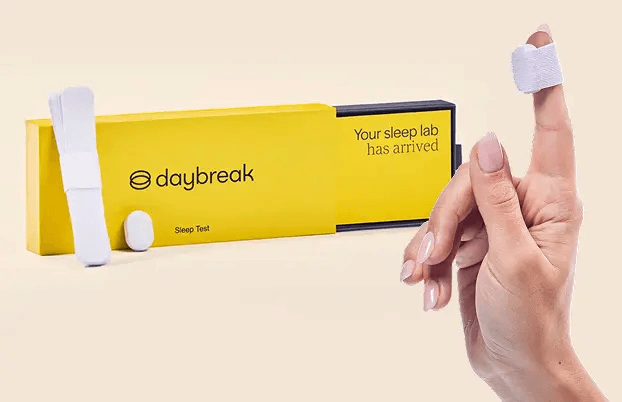
The first step isn’t necessarily a night inside a sleep center.
Daybreak offers an At-Home Sleep Test that is delivered directly to the patient.
The small wireless device is worn on the finger while sleeping and connects through the NightOwl app. Daybreak currently describes its test as FDA-cleared and 98% accurate for detecting sleep apnea.
Even more importantly, this isn’t positioned as a DIY diagnosis.
The sleep data is reviewed by a doctor, with the testing process designed to determine whether obstructive sleep apnea is present and whether the person may be eligible for treatment.
That distinction matters.
Testing happens at home. The medical interpretation still comes from a professional.
The Test Itself Is Surprisingly Small
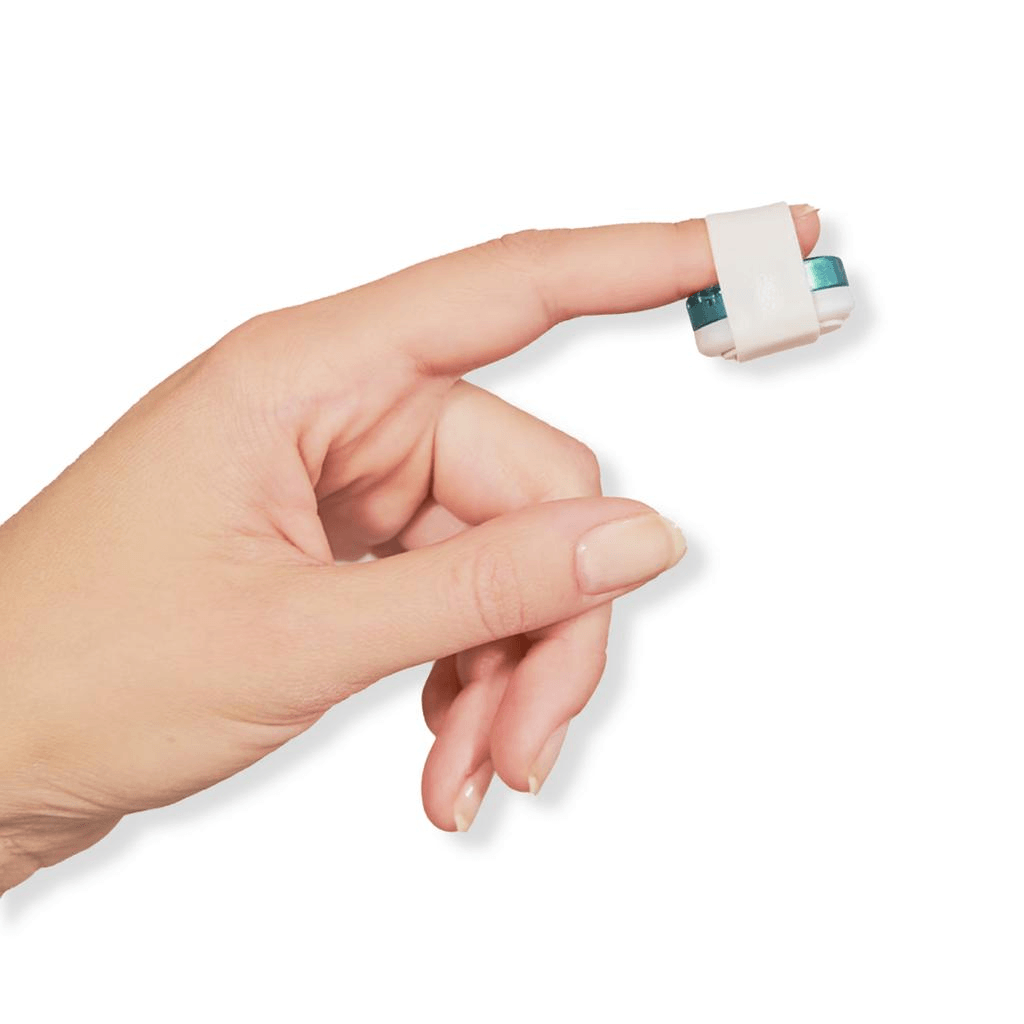
This was one of the more interesting parts of Daybreak for me.
Instead of imagining wires, sensors and an unfamiliar bed, the company’s test uses a small finger-worn device.
The current test works with a mobile device through Bluetooth, with the app guiding users through setup before bed.
Daybreak currently lists the At-Home Sleep Test at $159.95, although promotional pricing can sometimes change that amount.
For eligible users, it can also be purchased using FSA/HSA funds.
The Diagnosis Still Comes From a Doctor

The convenience of at-home testing could make the process sound almost like using a sleep-tracking wearable.
But there’s an important difference.
Daybreak’s test is intended to collect medical sleep data that is then reviewed by a doctor. The results can provide a formal diagnosis and help determine the next appropriate step.
And not everyone who has trouble sleeping necessarily has obstructive sleep apnea.
That makes the clinical review an important part of the Daybreak model rather than simply an extra feature.
The Daybreak Device Takes a Different Approach to CPAP
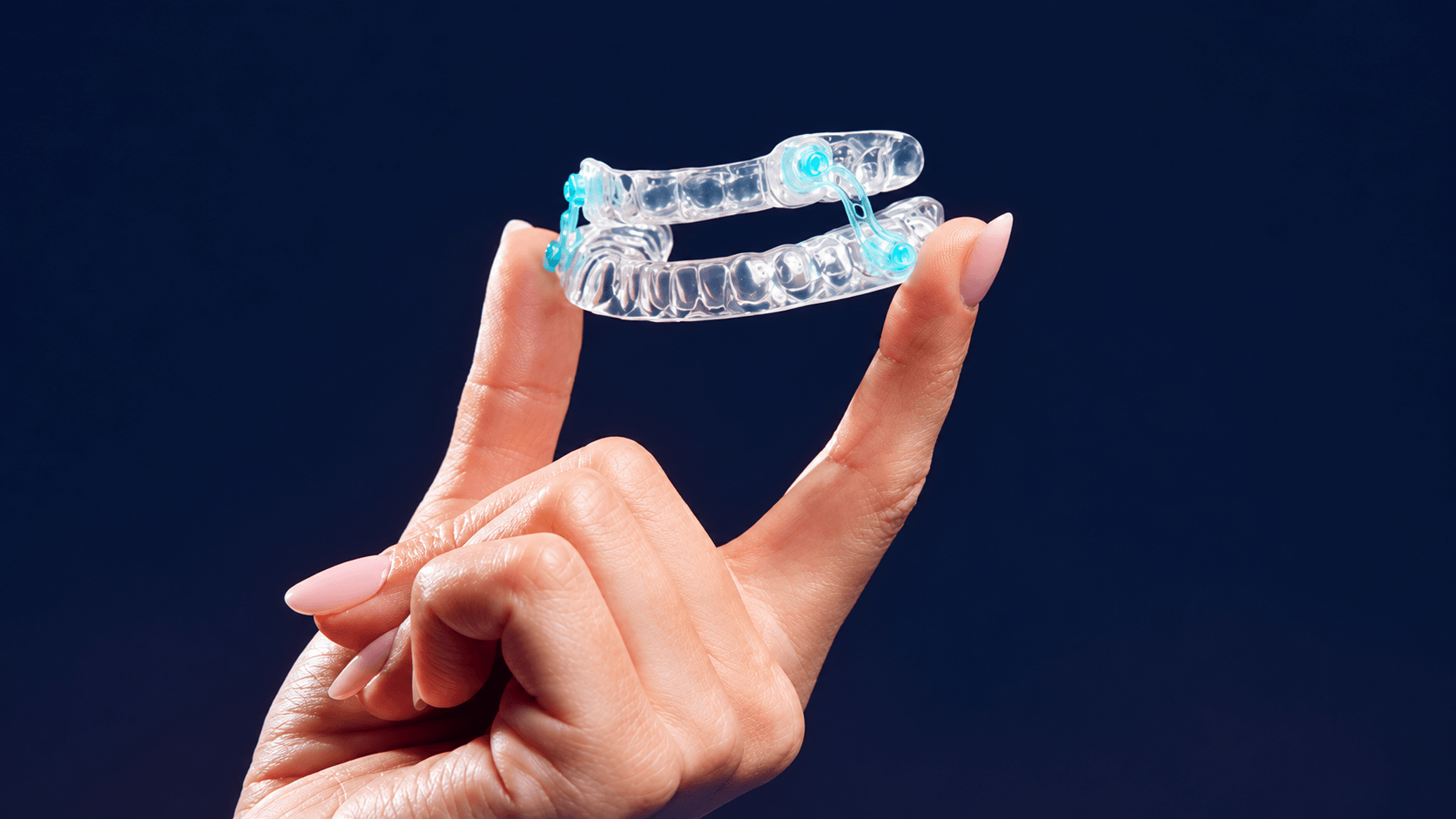
For eligible patients, treatment can move to the Daybreak Device.
This is where the company’s approach becomes particularly different from the sleep-apnea treatment most people recognize.
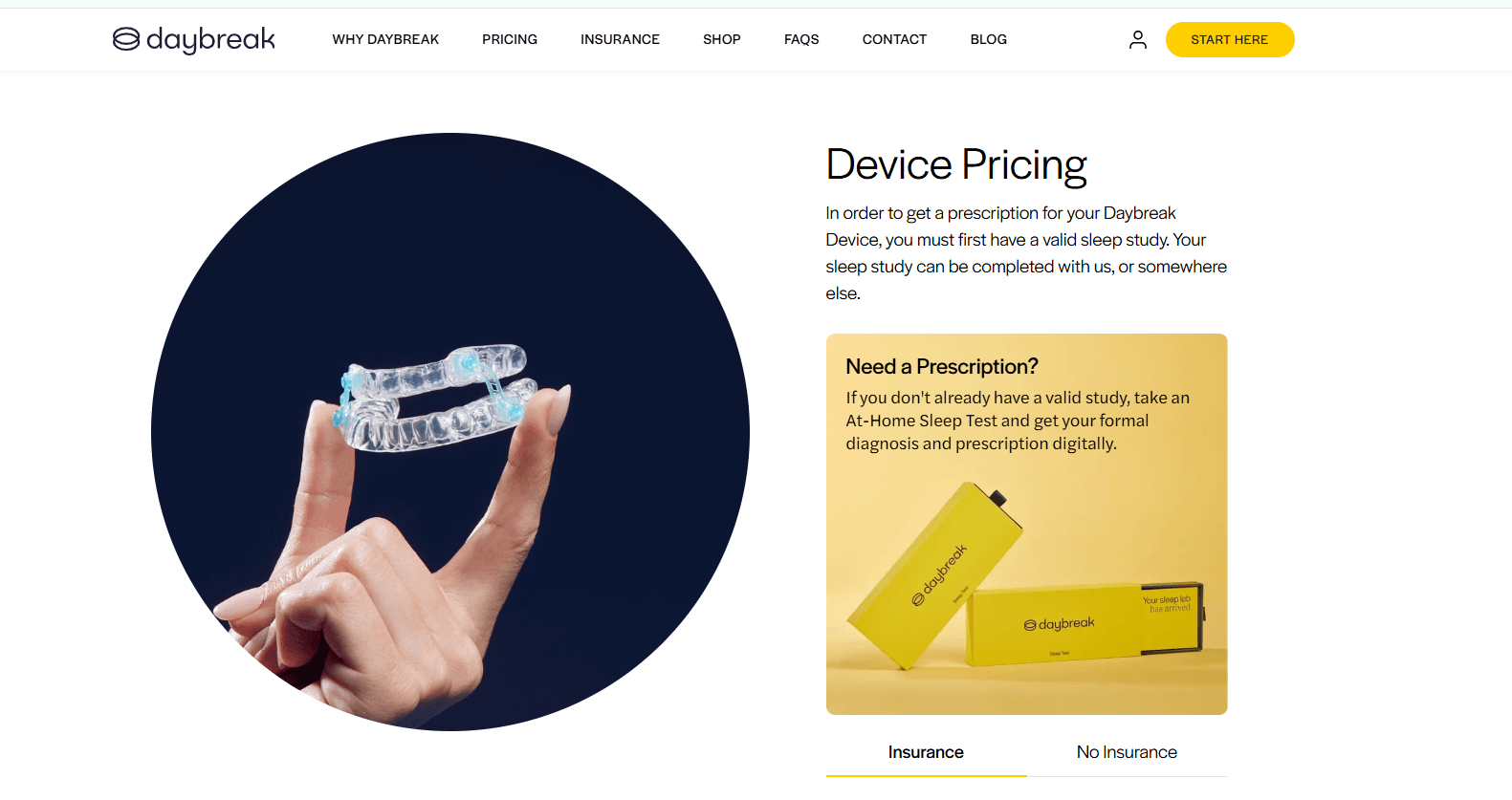
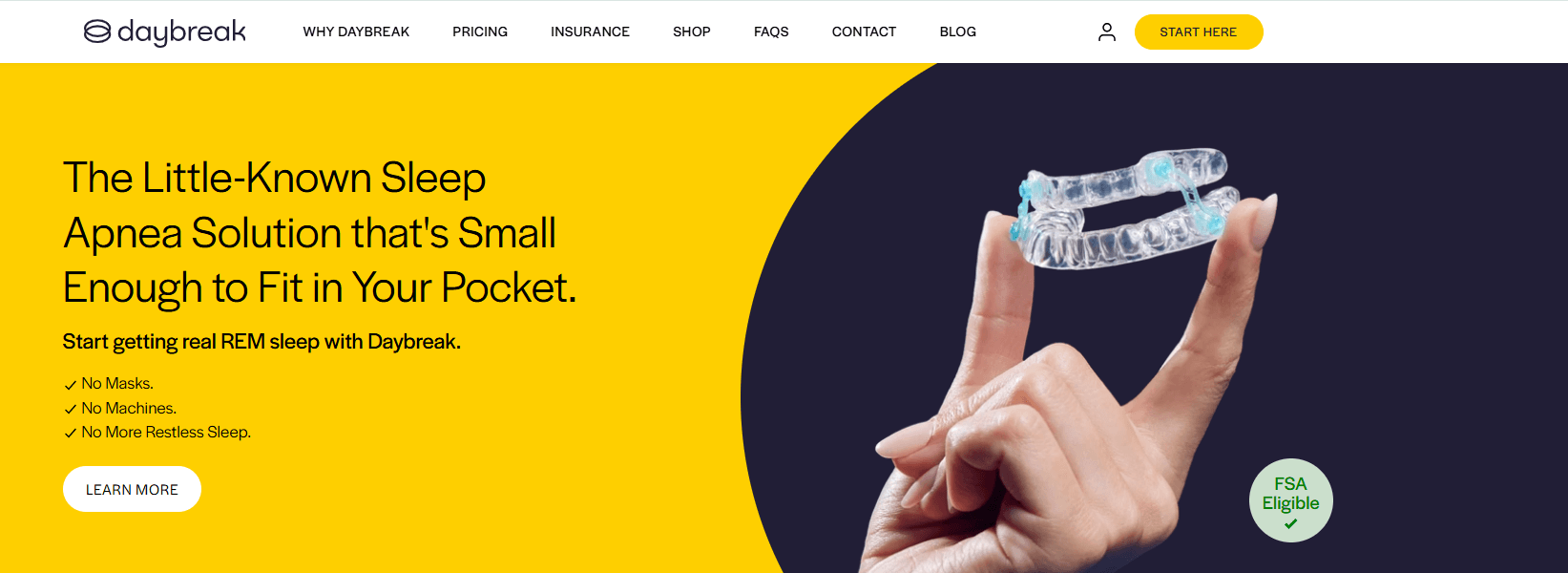
Rather than a mask connected to a bedside machine, the Daybreak Device is a custom-fit oral appliance.
It’s a type of mandibular advancement device, or MAD, designed to position the lower jaw forward to help prevent the airway from narrowing or closing during sleep. Daybreak says its custom device is FDA-cleared for treating obstructive sleep apnea and snoring.
There’s no mask, hose, battery or bedside machine.
And because the device is small, it’s also designed to be portable and travel-friendly.
A Custom Fit Starts With Dental Impressions
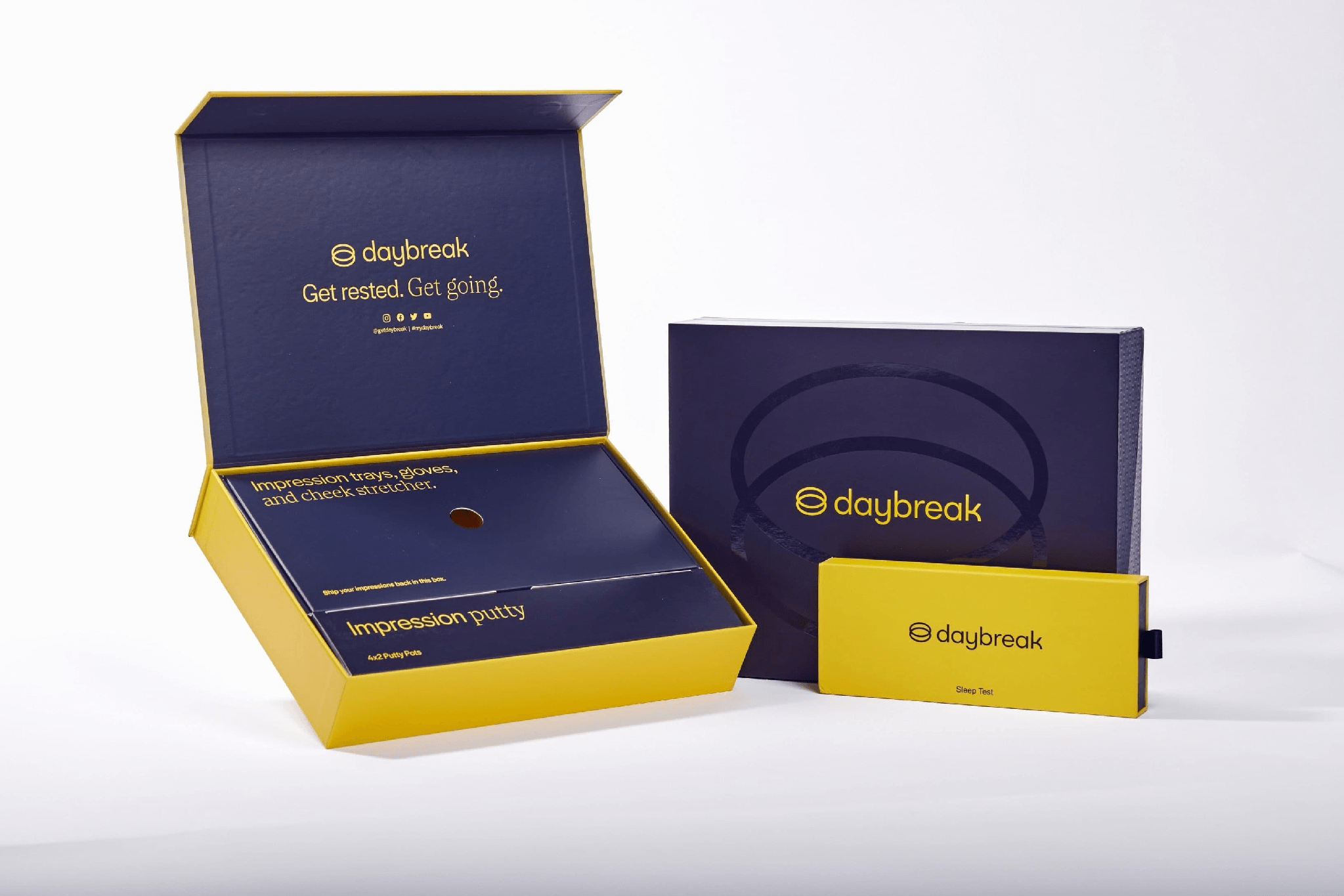
This isn’t an off-the-shelf mouthguard.
Each Daybreak Device is custom-made for the individual patient.
Dental impressions are used to create the appliance, with the fabrication process overseen by dental professionals. Once completed, the custom device is delivered to the patient and followed by a clinical optimization process intended to address comfort and effectiveness.
That personalized fit is an important distinction between a prescription sleep-apnea appliance and the generic mouthguards available in stores.
The Entire Treatment Journey Is Designed Around Home
Looking at Daybreak as a whole, the device isn’t really the entire story.
It’s the process surrounding it that stands out.
At-Home Test → Doctor Review → Diagnosis → Custom Device → Delivery → Follow-Up Care
Daybreak describes its model as doctor-driven, with affiliated clinical professionals involved in diagnosis and treatment rather than leaving patients to interpret results or manage treatment by themselves.
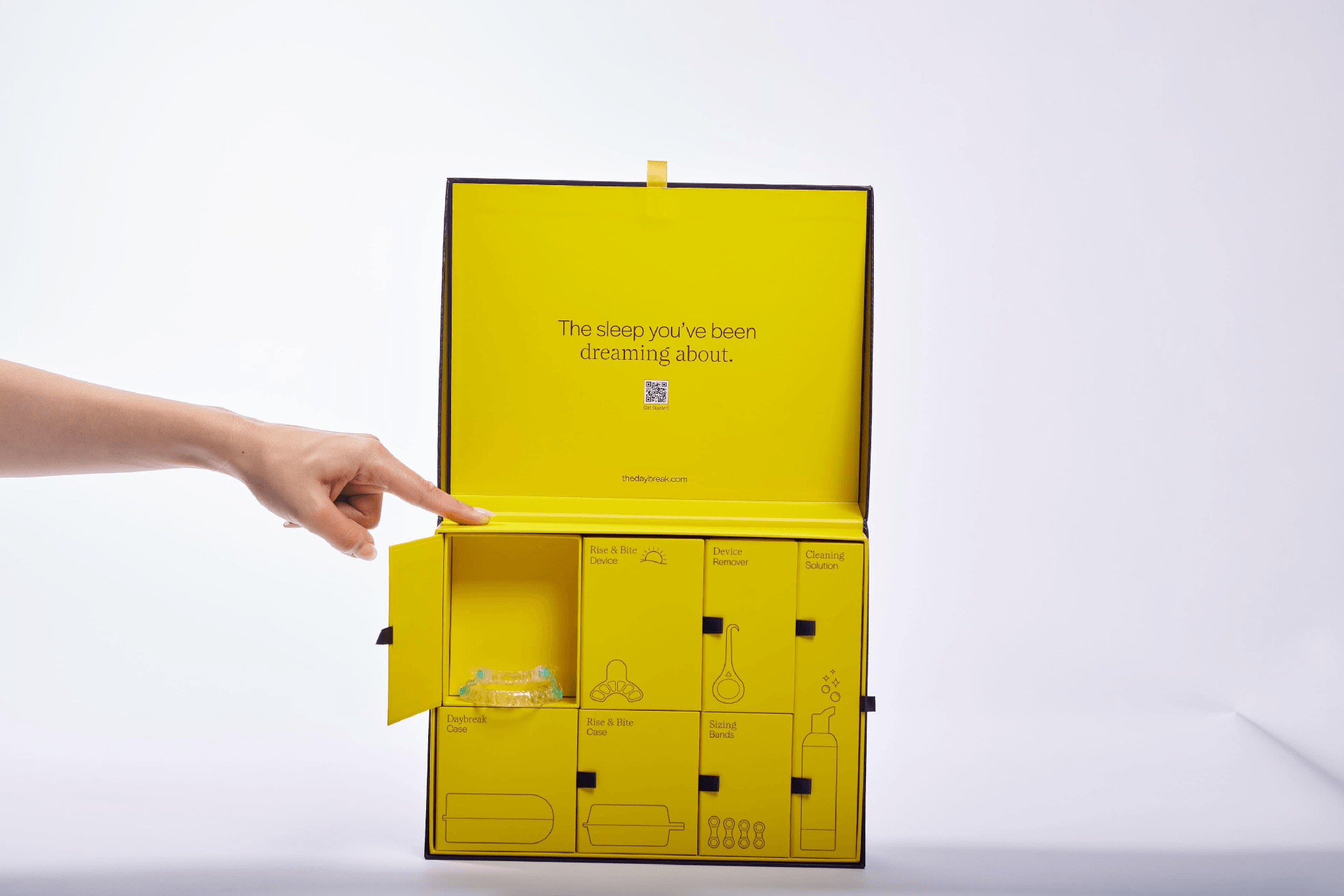
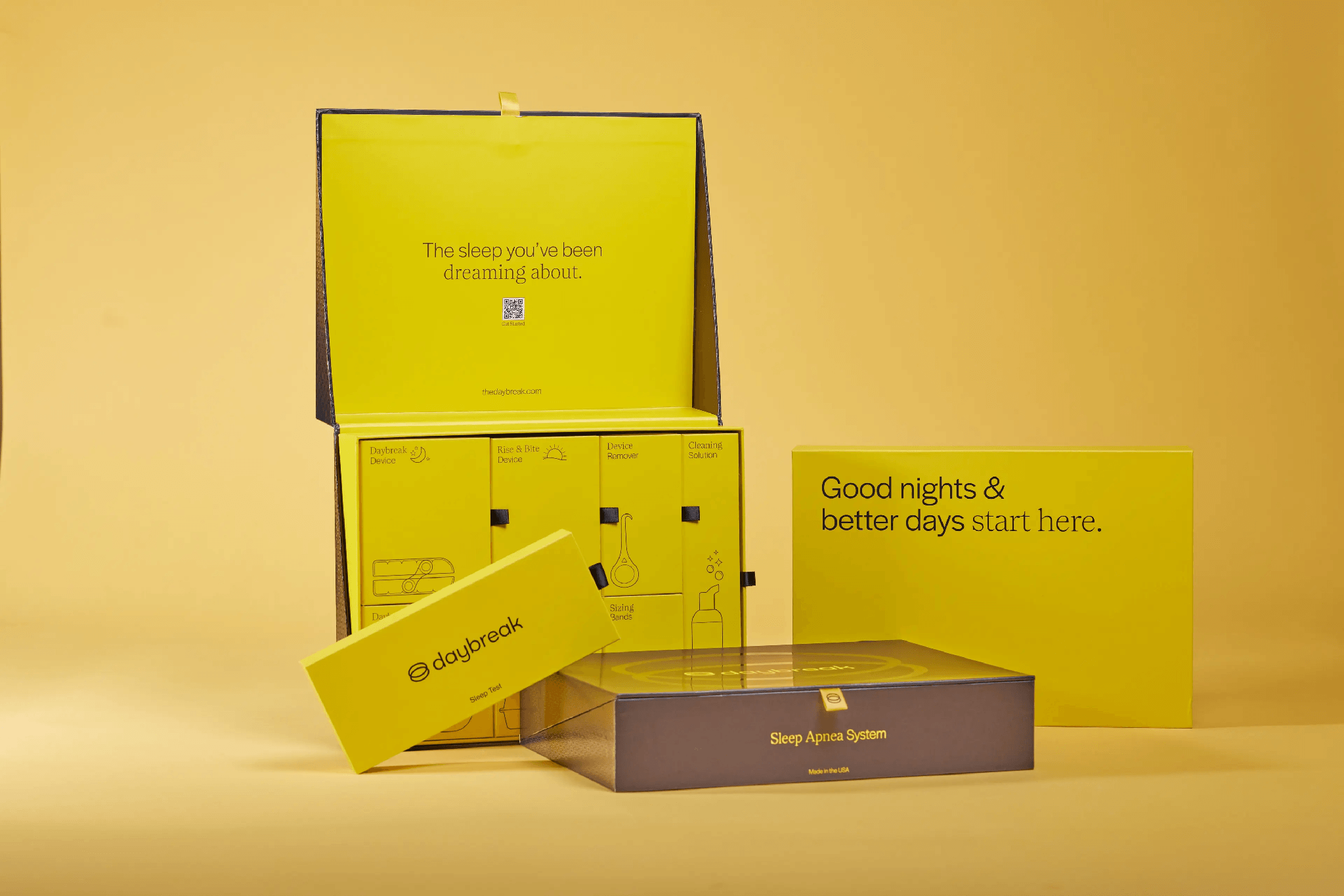
The company’s Daybreak Sleep System also brings together the custom oral device with accessories including its case, cleaning solution and replacement bands, alongside support and follow-up treatment when necessary.
It feels less like buying one sleep product and more like moving through a remote care system.
Insurance Can Make the Price Look Very Different
This is one section I’d definitely read carefully before starting.
Daybreak currently lists a $3,490 full treatment cost on its pricing page, with financing advertised as low as $89 per month under specified financing terms.
But insurance can substantially change what an eligible patient ultimately pays.
Daybreak works with medical insurers to verify benefits and estimate potential coverage. It says the device is covered by many major health insurance providers, although actual coverage depends on the individual’s policy and eligibility. Daybreak also notes that its services aren’t billable to government plans.
There’s another cost worth noticing.
For qualifying insured patients, Daybreak currently lists a separate $995 Treatment Essentials charge for items that it says aren’t reimbursed by insurance.
So this isn’t a product where I’d judge affordability from one headline number alone.
Insurance • Deductible • Coinsurance • Treatment Essentials • Financing
All can affect the final cost.
Daybreak Is More Than a CPAP Alternative
What changed my perspective on Daybreak was realizing that its main idea isn’t simply:
“Here’s a smaller alternative to a CPAP machine.”
The bigger idea is bringing several stages of sleep-apnea care together into one more convenient system.
There is an at-home sleep test, professional review, diagnosis, insurance assistance, custom oral appliance, delivery and ongoing support.
That doesn’t mean an oral appliance is appropriate for everyone with sleep apnea, and treatment decisions should be made with qualified healthcare professionals.
But for eligible patients, Daybreak represents a noticeably different approach to how sleep-apnea care can be delivered.
Why Daybreak’s At-Home Model Stands Out in 2026
Healthcare has steadily moved beyond the traditional doctor’s office, and Daybreak shows how far that idea can extend.
Even something as specialized as sleep-apnea testing and custom oral-appliance treatment can now involve considerably more care from home.
What stands out to me isn’t one flashy feature.
It’s how the pieces connect.
Testing at home. Professional review. A custom-fit device. Insurance support. Follow-up care.
There are still important considerations — particularly medical eligibility, insurance coverage, total cost and whether an oral appliance is clinically appropriate for the individual patient.
But Daybreak’s approach makes one thing clear:
Sleep apnea care doesn’t always have to begin in a sleep lab or revolve around a bedside machine.
And that’s what makes Daybreak one of the more interesting examples of how at-home sleep care is evolving in 2026.